Image / Time
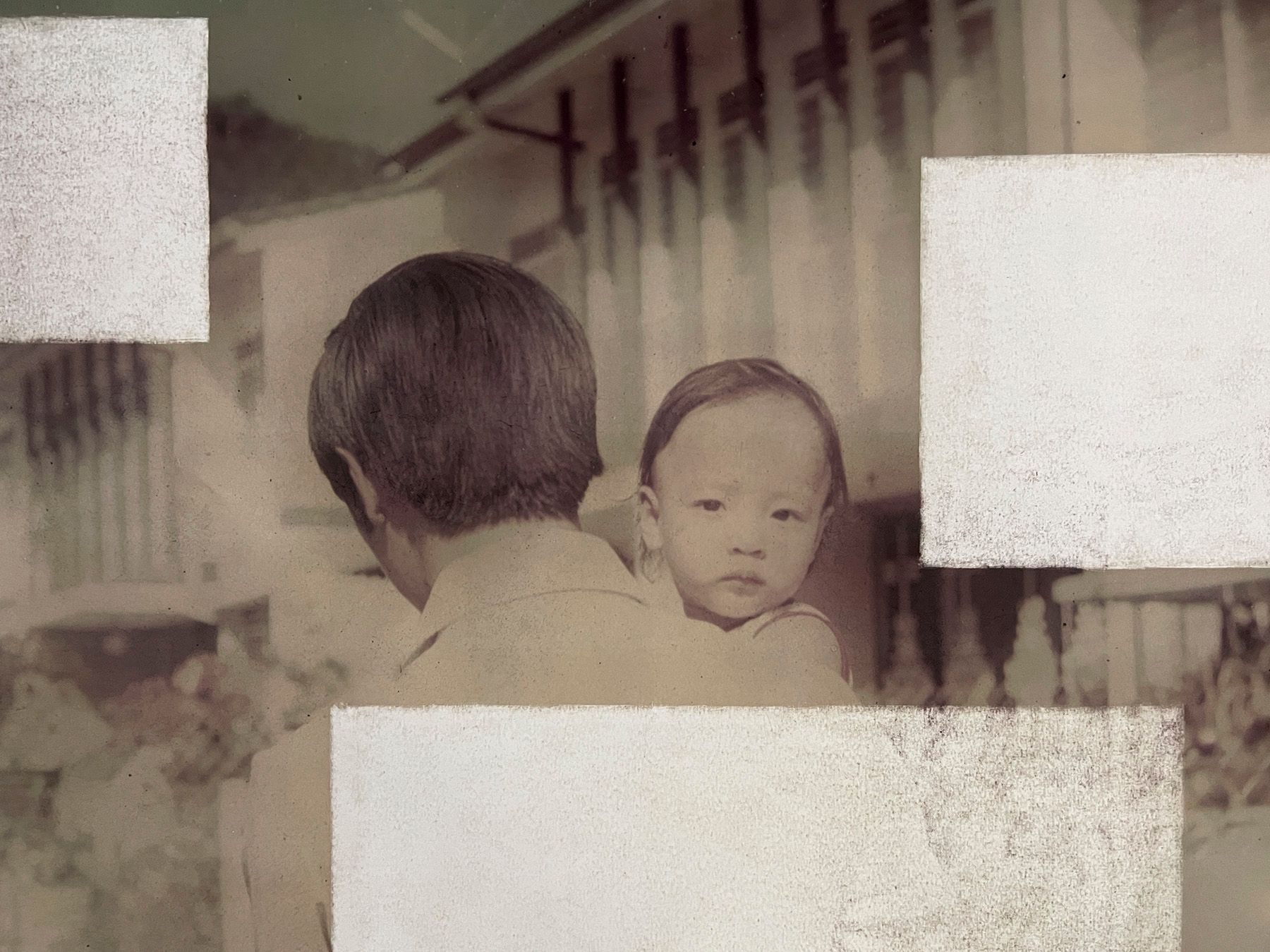
In Image / Time, Wei Leng Tay deconstructs photographs to consider their role in describing the world we live in. In the works, she presents archival and contemporary photographs of family that were made with different technologies including microscopy, film and digital photography. Most of the works begin as rephotographs of family slides from the early 70s, straddling geographies including Malaysia and Australia, places that figured in the family’s migratory journey. These rephotographs distort time and place. In addition to the original image that is captured in the slide, the rephotograph presents traces of the photo slide’s journey, through geography, climate and time, inscribed as detritus, cracks and chemical colour shifts seen in the rephotograph. These photographs are in turn sanded, layered and fragmented to imagine different ways photographs are stories of history.
For three of the works -
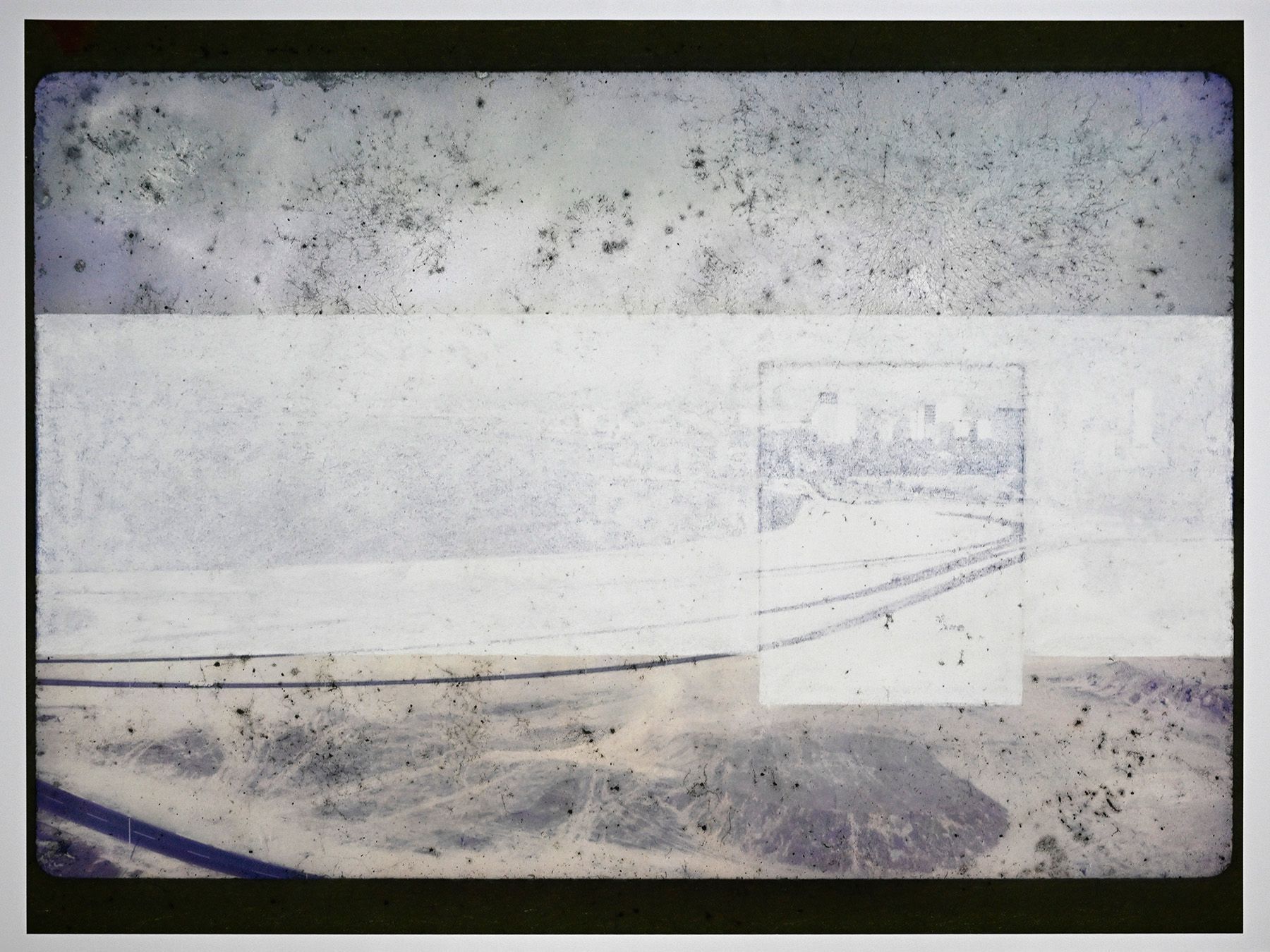
Sanded Penang, 600-1500,
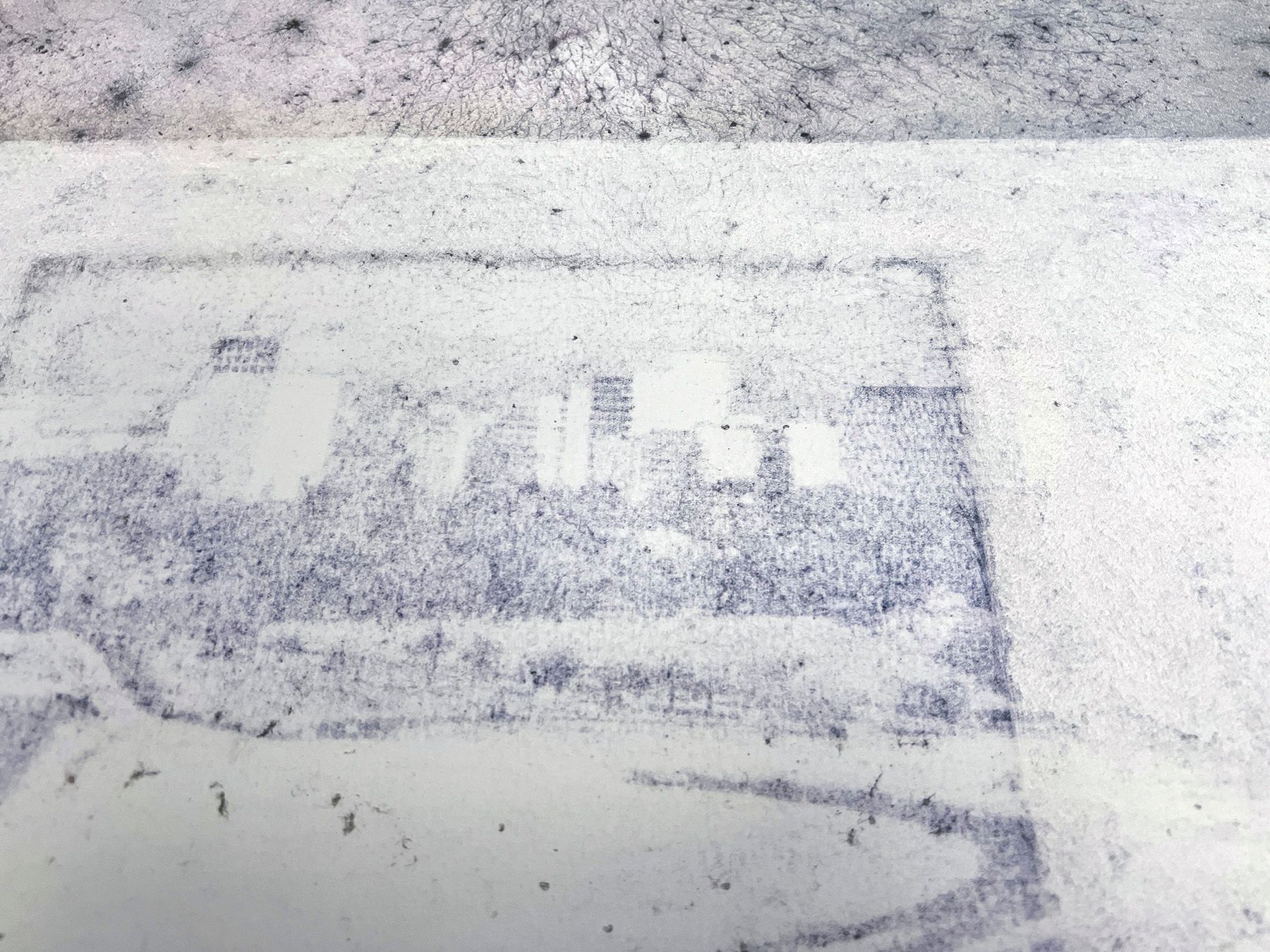
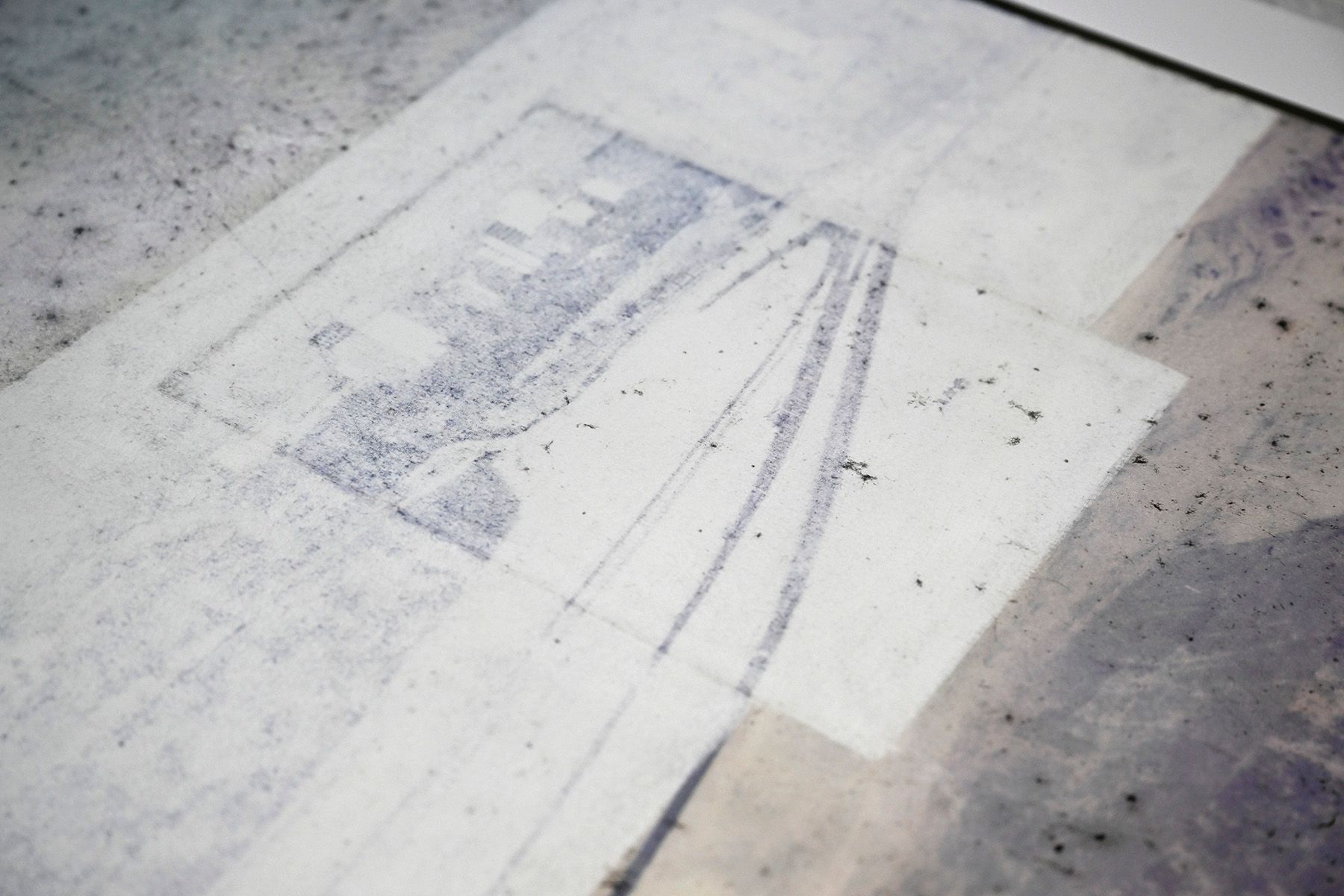
Sanded Perth, 120-1500, and
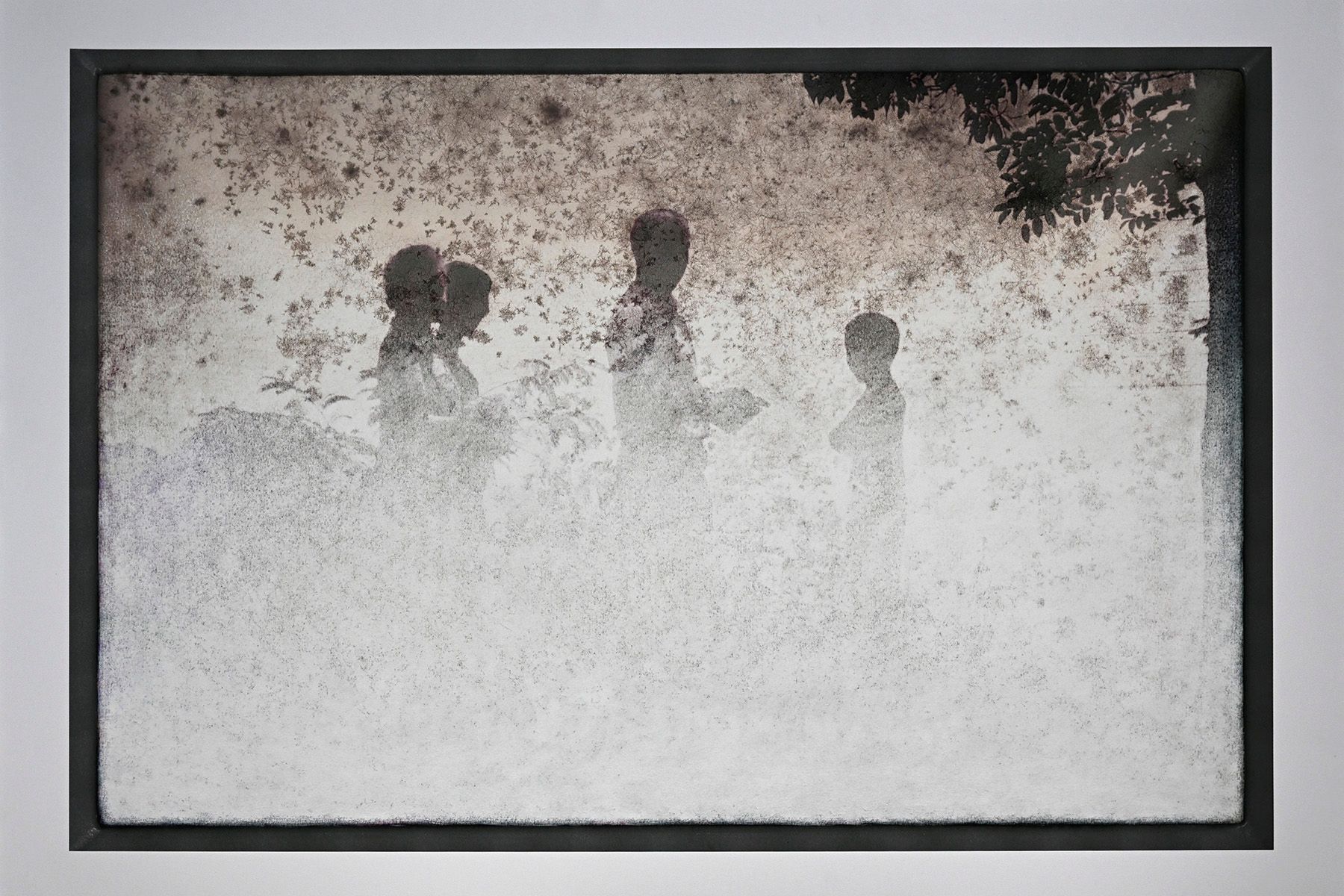
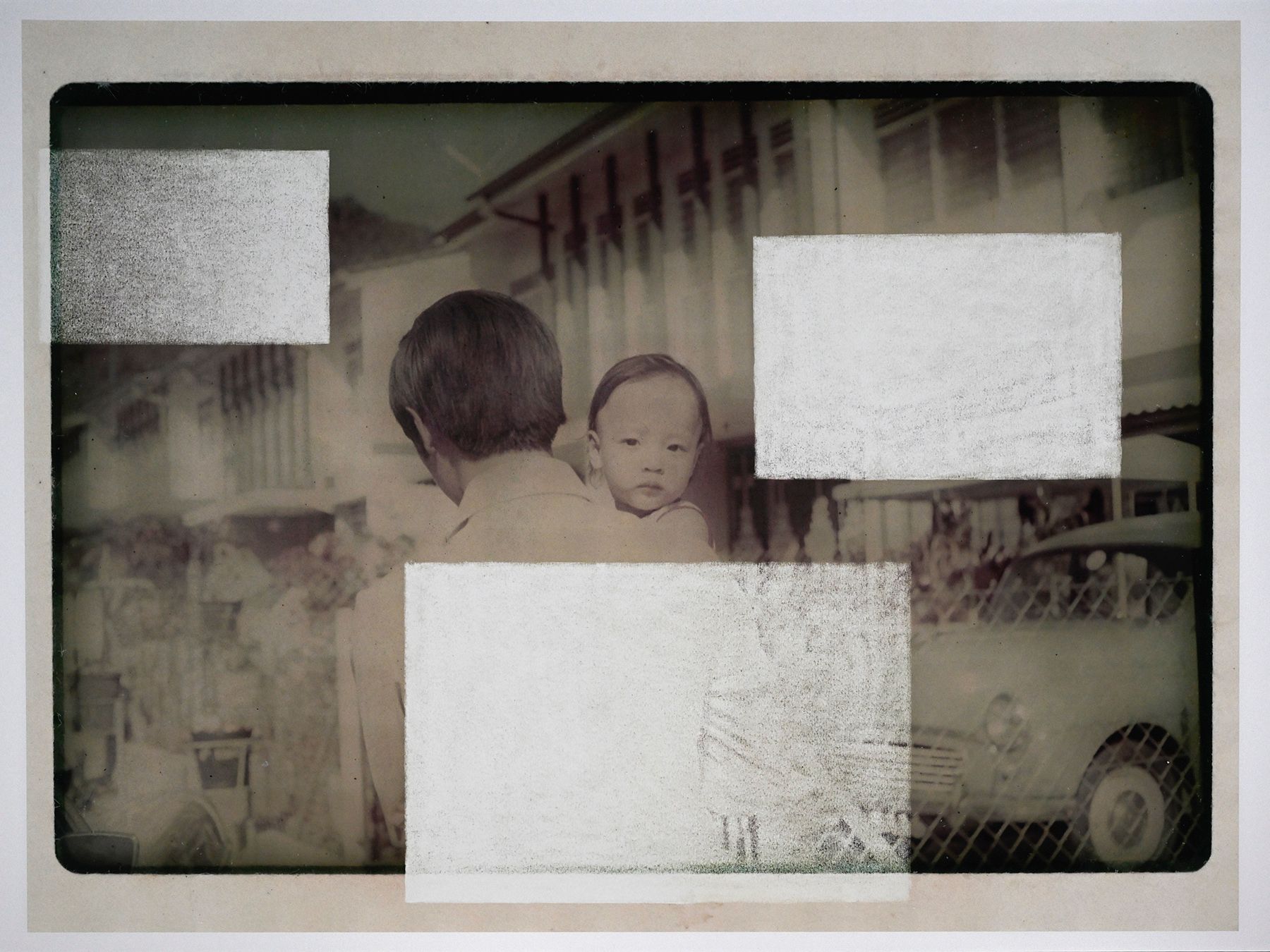
Sanded Penang, 120-400-600-1500, the rephotographs are sanded and fragmented, further compounding and creating questions about the history that lies in the object. In
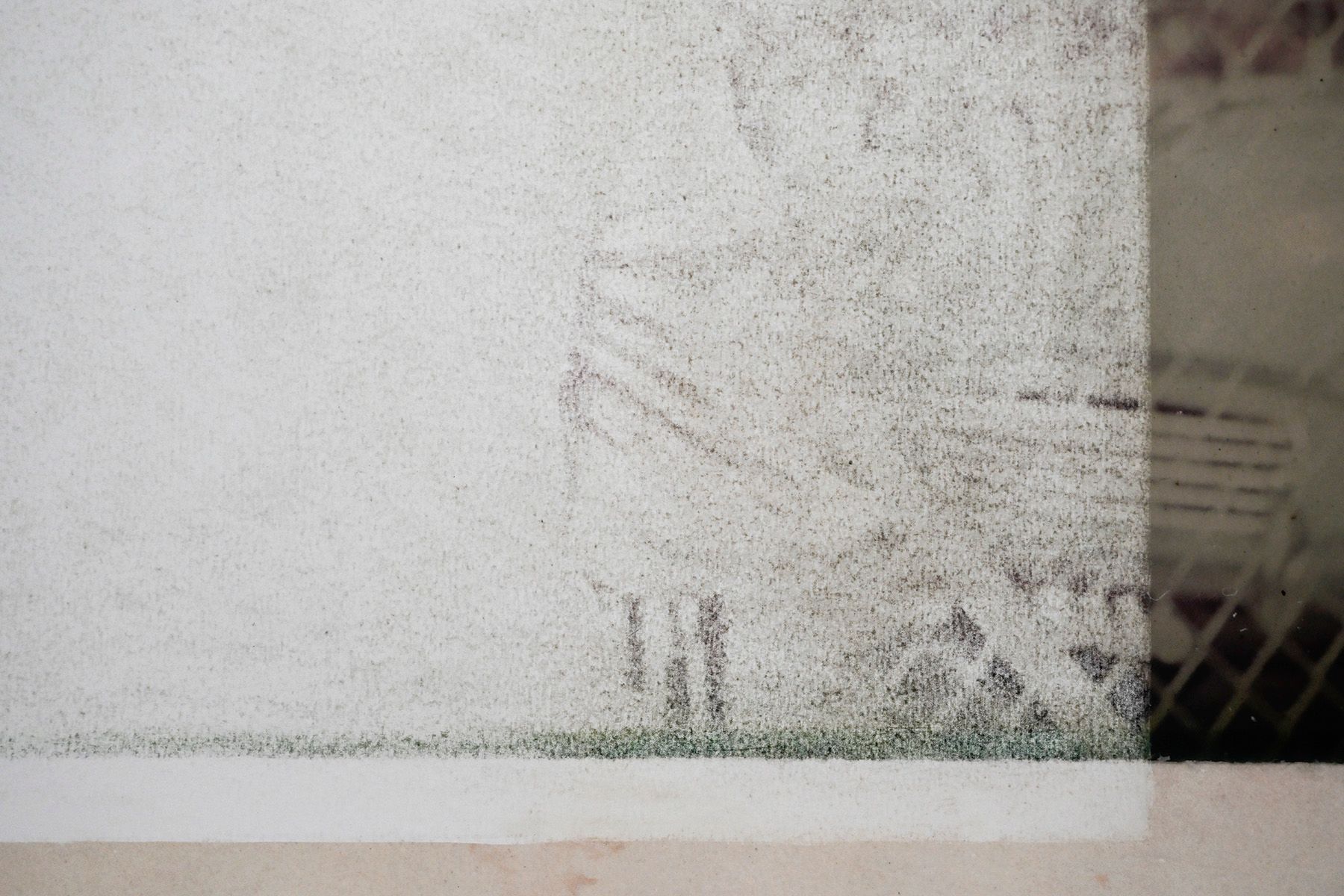
Sanded Penang, 600-1500, the persons in the photograph walk into the past and look back at the viewer. With the hand-sanding, Tay creates a circular movement of erasure around the people, between the sanded rectangles that reference the dimensions of the 35mm slide, and a movement within the sanded translucencies of the rectangles. In
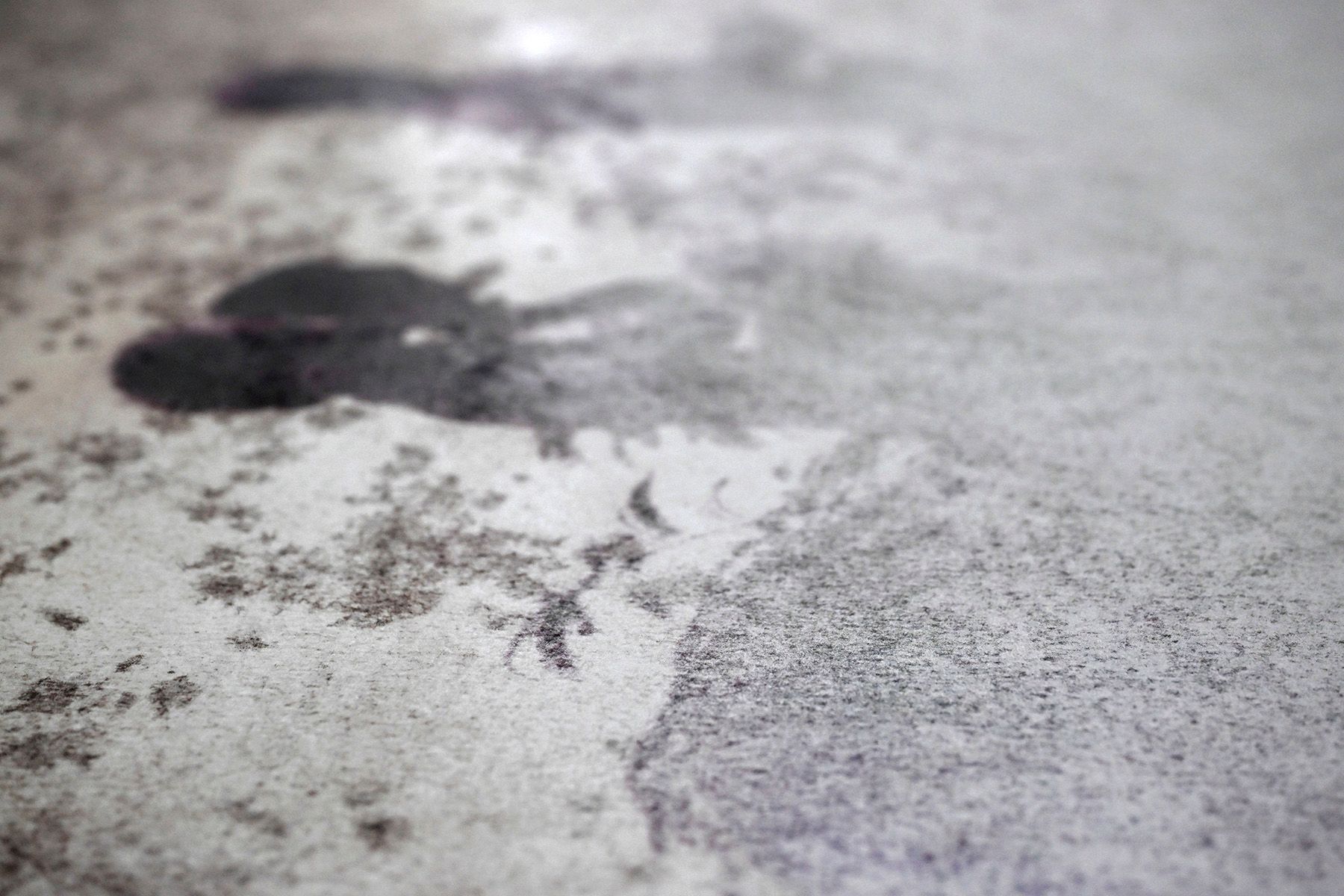
Sanded Perth, 120-1500, the city of Perth in the image is carefully sanded away, following the height of the ‘letter size’- a reference to the stationary format where the work was made in June 2025. Within the band where the history is removed, a letter-sized portion with a turn in the road is sanded with a finer paper – grit 1500, creating a smooth surface, in contrast to the other more textured parts. In
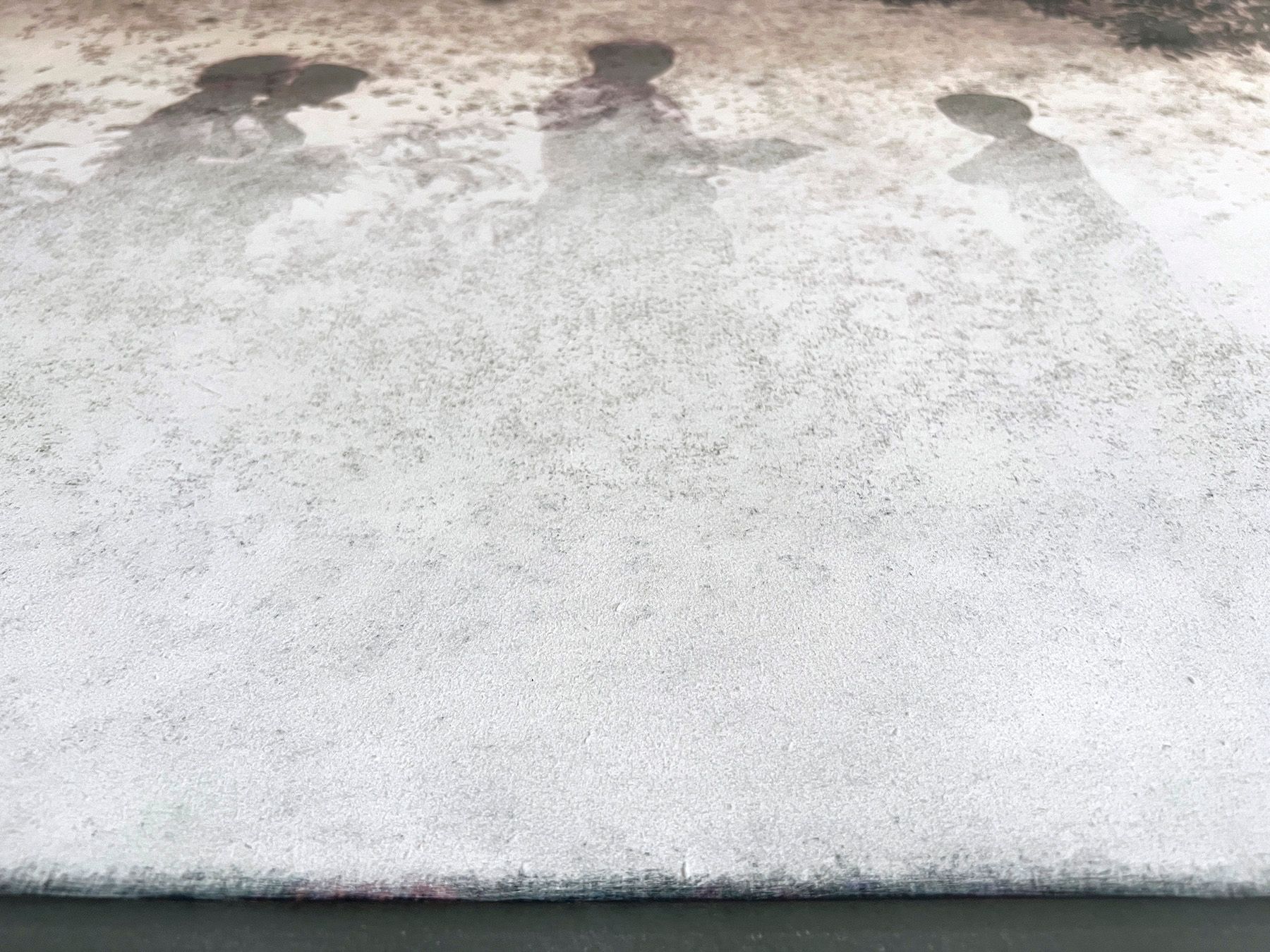
Sanded Penang, 120-400-600-1500, visitors from Perth stand with family members on a viewing point in Penang, Malaysia. Using differently coarse sandpaper, the ground in the image is removed, and the bodies gently emerge as the eye moves upwards. With the hand-sanding in the works, the substrate and surface of the photograph and image become primary. They expose traces of the image in the print substrate and the image of the surface of the original photographic slide, opening a conversation between the photographic object from the past and present. In
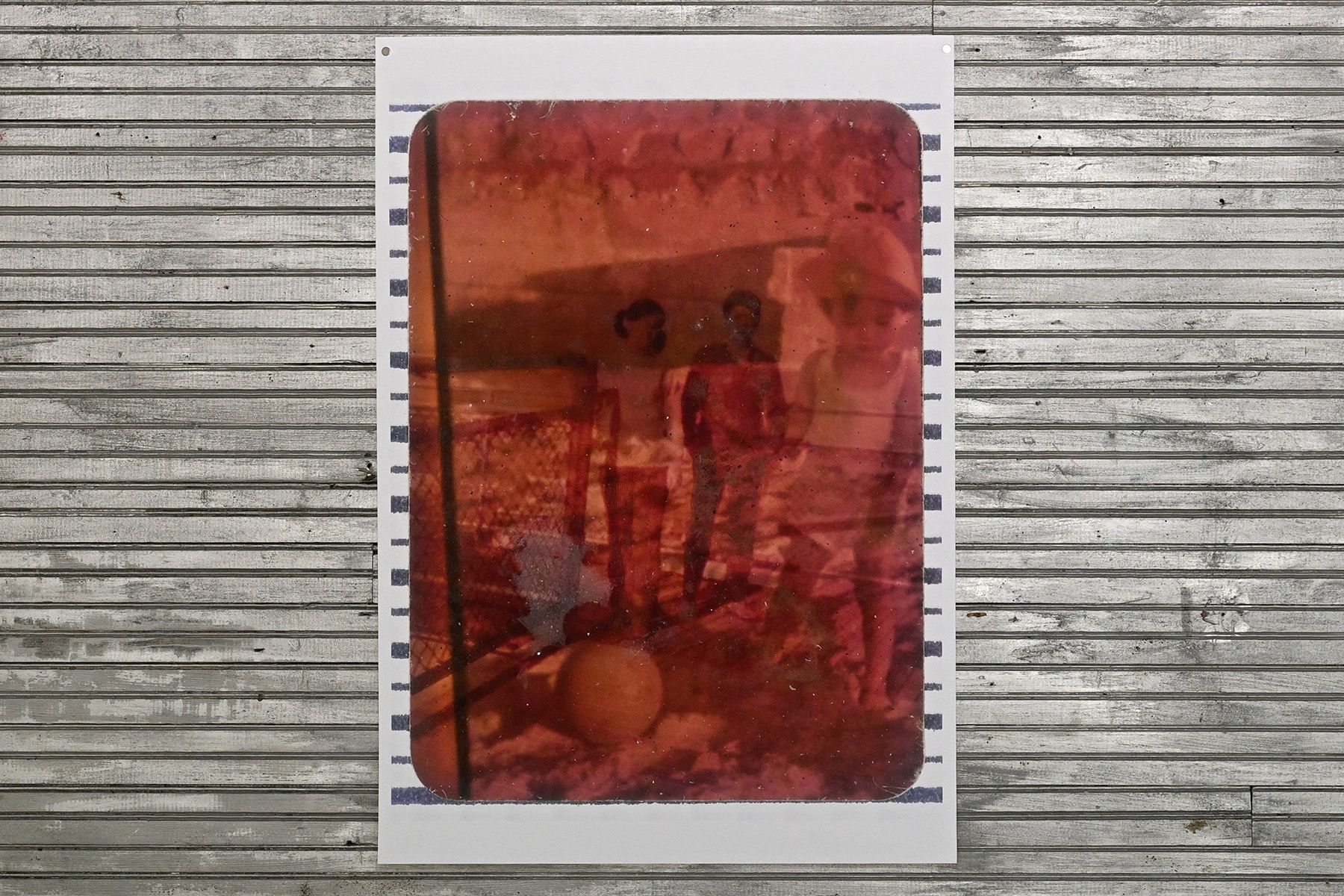
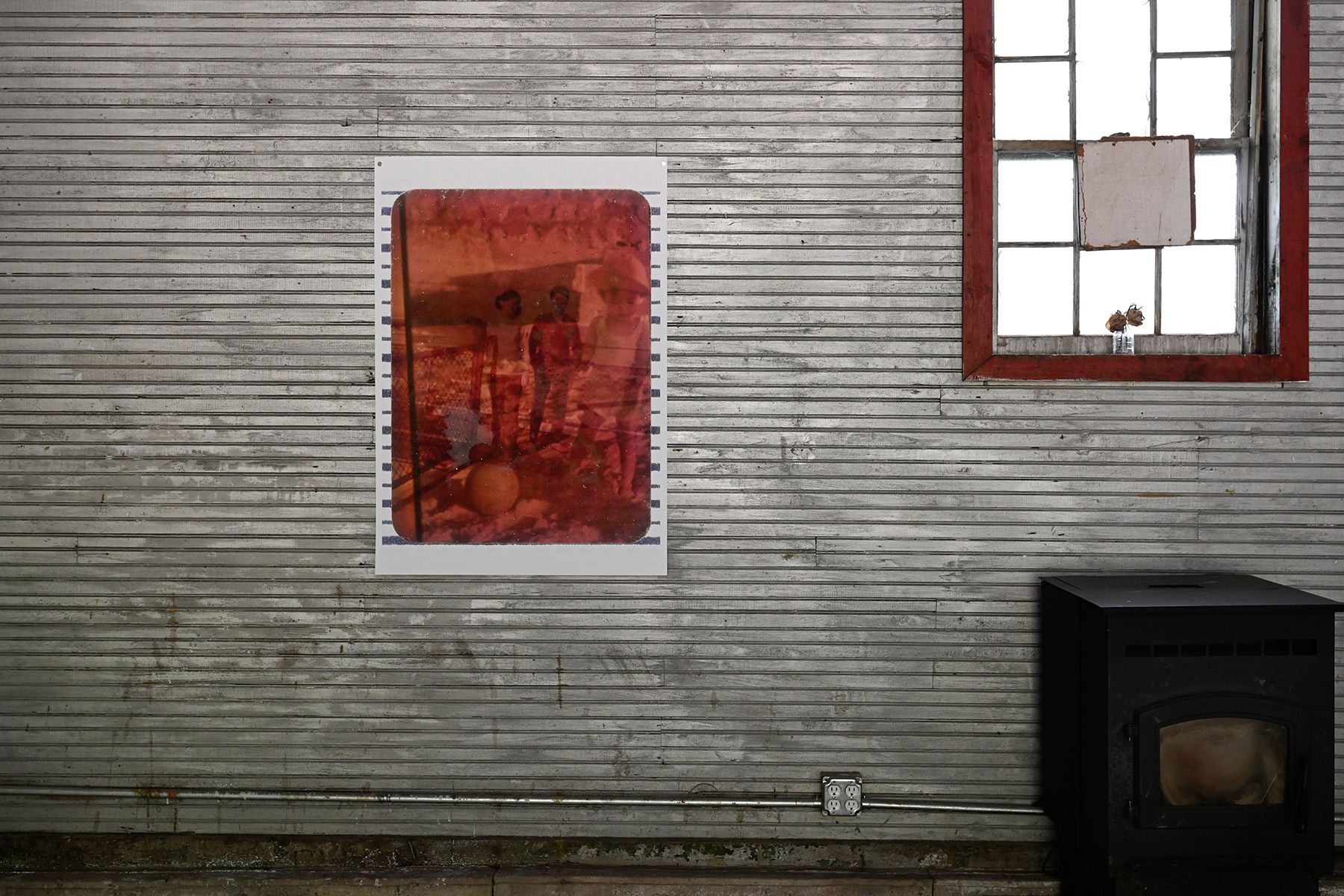
Layering Histories (2025), an overlaying of time and family ties is created in the photographic process. Here, one half-frame and full frame 35 mm slide are put on top of each other, and photographed with a microscope. The resultant juxtapositions aks the viewer not only to consider what these layers of depiction mean, they also bring forth a material and ecological presence, mixing these personal histories with temporal, environmental and geographical shifts.
It is through these processes of fragmentation and manual alterations, that the works comment on photographic systems and substrates, questioning photography's role in influencing one's understanding of the world around us.
Below are four of the works in the exhibition.
Image / Time was presented at Arts & Rec.